- 1. 1. What Sexual Assault Offenses May Be Investigated?
- 2. 2. Accused of Sexual Assault in Taiwan: What Must Prosecutors Prove?
- 3. 3. What Should You Do Immediately After Learning About the Accusation?
- 4. 4. What Is a “Honey Trap” or Sexual-Extortion Scheme?
- 5. 5. What Evidence May Indicate a Sexual-Extortion Setup?
- 6. 6. Can You Report Extortion or False Accusation?
- 7. 7. What Happens After a Sexual Assault Complaint Is Filed?
- 8. 8. Can Police Collect a DNA Sample?
- 9. 9. Should You Exercise the Right to Remain Silent?
- 10. 10. How Do Prosecutors Evaluate Consent?
- 11. 11. What Evidence Can Support a Non-Prosecution Disposition?
- 12. 12. How Can a Criminal Defense Lawyer Help?
- 13. 13. Should You Seek a Settlement?
-
14.
14. Common Mistakes After a Sexual Assault Accusation
- 14.1. ▪️Deleting unfavorable messages
- 14.2. ▪️Sending repeated explanations or apologies
- 14.3. ▪️Posting the complainant’s identity online
- 14.4. ▪️Calling every accusation a honey trap
- 14.5. ▪️Filing a retaliatory complaint immediately
- 14.6. ▪️Guessing during questioning
- 14.7. ▪️Asking friends to coordinate accounts
- 14.8. ▪️Assuming settlement guarantees dismissal
-
15.
15. Frequently Asked Questions
- 15.1. 1. What should I do if I am Accused of Sexual Assault in Taiwan?
- 15.2. 2. Does entering a hotel prove consent?
- 15.3. 3. Do friendly messages after the encounter prove the accusation is false?
- 15.4. 4. Does a delayed complaint mean the complainant is lying?
- 15.5. 5. Can I secretly pay the complainant to make the case disappear?
- 15.6. 6. Can police take a mouth-swab DNA sample?
- 15.7. 7. Does no DNA or no physical injury mean the case will be dismissed?
- 15.8. 8. Can I remain silent during police questioning?
- 15.9. 9. If the complainant demanded money, does that prove extortion?
- 15.10. 10. Can a lawyer guarantee non-prosecution?
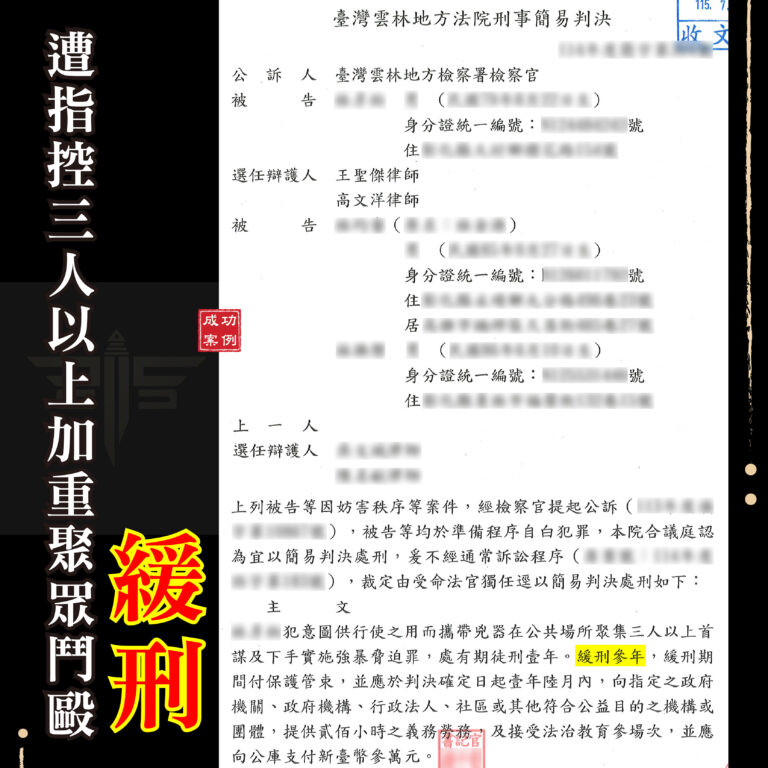
- 16. 16. Chien Sheng Sexual Assault Defense Case Results
- 17. 💡Conclusion: Preserve the Evidence Before Trying to Explain Everything
- 18. 📢【24-Hour Free Legal Consultation】
Being Accused of Sexual Assault in Taiwan can affect a person’s freedom, reputation, family, employment, and immigration status before the investigation has even concluded. Whether the allegation involves forced intercourse, sexual activity with a person allegedly unable to resist, an intoxicated encounter, online dating, or a suspected sexual-extortion scheme, the first response should be to preserve evidence, avoid direct contact with the complainant, and obtain criminal defense advice before giving a detailed statement.
📢 A sexual assault complaint does not automatically establish guilt. At the same time, calling the allegation a “honey trap” does not make it false. Prosecutors must examine the complainant’s account, the suspect’s explanation, digital communications, witnesses, medical or forensic evidence, surveillance footage, payment demands, and the complete sequence of events.
The defense should therefore be based on verifiable evidence rather than anger, assumptions, or attacks on the complainant.This article explains Taiwan’s major sexual autonomy offenses, what to do after receiving a police notice, how a suspected sexual-extortion setup should be handled, when DNA sampling may occur, and how a lawyer may seek a non-prosecution disposition.
1. What Sexual Assault Offenses May Be Investigated?
“Sexual assault” is a general description rather than the name of one single offense under Taiwan law. The applicable charge depends on the alleged conduct, the complainant’s condition, age, relationship with the accused, and the methods allegedly used.
Forced sexual intercourse under Criminal Code Article 221
Article 221 applies where a person uses violence, threats, intimidation, hypnosis, or another method against another person’s will to engage in sexual intercourse.
The offense is punishable by imprisonment for three to ten years. An attempted offense is also punishable.
💡The investigation may focus on:
- What words or actions allegedly expressed refusal
- Whether violence, threats, restraint, intimidation, or another coercive method was used
- Whether consent was withdrawn during the encounter
- Whether the accused knew the conduct was against the other person’s will
- Whether physical, digital, medical, or witness evidence supports either account
- What occurred immediately before and after the alleged event
➠A prior romantic relationship, earlier consensual sexual activity, or agreement to enter a hotel does not automatically establish consent to every later sexual act. Consent may be limited or withdrawn.Conversely, an accusation must still be examined under criminal evidentiary standards. The investigation should not treat the existence of a complaint as a substitute for proof of every element.
Exploiting a person unable or unaware to resist under Article 225
Article 225 applies where a person takes advantage of another person’s mental or physical disability, cognitive impairment, or a similar condition that makes the person unable or unaware to resist, and engages in sexual intercourse.The penalty for intercourse is also imprisonment for three to ten years.
💡These cases often involve allegations that the complainant was:
- Heavily intoxicated
- Unconscious or asleep
- Affected by medication
- Cognitively impaired
- Physically unable to respond
- Unable to understand or resist what was occurring
➠The fact that alcohol was consumed does not automatically prove incapacity. The issue is the person’s actual condition at the relevant time and whether the accused recognized and exploited that condition.Evidence may include drinking records, surveillance footage, witness observations, messages, transportation records, medical findings, memory descriptions, and the accused’s own statements.
Aggravated offenses under Article 222
Article 222 provides substantially heavier punishment for specified aggravated circumstances, including certain offenses:
- Committed by two or more persons
- Committed against a person under 14
- Committed against a person with specified mental or physical conditions
- Committed through the use of drugs
- Accompanied by abuse
- Committed with a weapon
- Committed after entering or hiding in a residence
- Involving the recording or dissemination of the victim’s image, sound, or electronic record
➠An aggravated forced-intercourse offense may carry imprisonment of at least seven years.
Sexual activity involving minors
Age must be verified immediately.
Under Article 227, sexual intercourse with a person under 14 may constitute an offense regardless of a claim that the minor consented. Sexual intercourse with a person aged 14 or 15 may also be criminally punishable.
➠Accordingly, a defense based on consent may not answer an age-based offense. Online profile restrictions, statements about age, appearance, school status, identification documents, and communications about age may become important, but the applicable offense must first be identified precisely.
Article 228 may apply where a person uses authority or an opportunity arising from family, guardianship, education, training, medical care, employment, official duties, or another supervisory or dependent relationship to engage in sexual activity.
➠Cases involving teachers, supervisors, employers, coaches, medical professionals, caregivers, or similar relationships may therefore involve legal issues beyond ordinary consent.
2. Accused of Sexual Assault in Taiwan: What Must Prosecutors Prove?
The prosecution must prove the elements of the alleged offense through admissible evidence. Under the Code of Criminal Procedure, a defendant is presumed innocent until proven guilty, and criminal facts cannot be established without evidence.
🚨Depending on the charge, disputed issues may include:
- Whether sexual intercourse or sexual contact occurred.
- Whether the complainant consented to the specific act at the relevant time.
- Whether force, threats, intimidation, hypnosis, or another method against the complainant’s will was used.
- Whether the complainant was unable or unaware to resist.
- Whether the accused knew of and exploited that condition.
- Whether the complainant’s age created a separate statutory offense.
- Whether the accused was correctly identified.
- Whether electronic, medical, forensic, and witness evidence supports the accusation.
- Whether the accused’s statements were accurately recorded and voluntarily made.
- Whether the investigation preserved both favorable and unfavorable evidence.
➠A complainant’s statement is important evidence. It is not automatically true merely because it was made, and it is not automatically unreliable because the report was delayed or because the complainant continued communicating with the accused.
Courts and prosecutors assess credibility by considering the statement’s detail, consistency, context, surrounding evidence, possible changes over time, and whether objective information supports or contradicts material parts of the account.
3. What Should You Do Immediately After Learning About the Accusation?
Contact a criminal defense lawyer promptly
Do not wait until the prosecutor’s hearing or indictment to seek advice. Statements made during the first police interview may influence the entire investigation.
🔎A lawyer can help determine:
- The precise suspected offense
- Whether the person is being questioned as a witness, suspect, or defendant
- Whether immediate arrest or detention risks exist
- Which facts are legally significant
- Which evidence should be preserved
- Whether a detailed statement should be given immediately
- Whether the police record accurately reflects the answers
- Whether an independent complaint concerning extortion or another offense is appropriate
Preserve complete evidence
Do not preserve only favorable screenshots. Keep the full original context.
👨🏻⚖️Relevant materials may include:
- Dating-app profiles and matching history
- Complete LINE, Messenger, Instagram, Telegram, or SMS conversations
- Voice messages and call logs
- Emails
- Photos and videos with metadata
- Ride-hailing and taxi records
- Hotel reservations, invoices, and access records
- Restaurant or bar receipts
- Credit-card and mobile-payment records
- Location history
- Parking records
- Building or street surveillance footage
- Witness information
- Messages sent before and after the encounter
- Requests for money
- Threats to report the matter or disclose it to family or an employer
- Medical or prescription records
- Evidence concerning alcohol consumption
- Work schedules or travel records
Some surveillance systems overwrite footage within days. A lawyer may need to request preservation quickly.
Do not delete, edit, or manufacture evidence
Deleting messages, resetting a phone, editing screenshots, changing account information, or asking another person to coordinate a story may seriously damage the defense.If an intimate image or video exists, do not distribute it to friends or post it online. Unauthorized possession, forwarding, disclosure, or dissemination may create separate criminal and civil risks. Preserve the original material securely and discuss the proper method of submission with counsel.
Avoid direct contact with the complainant
Do not call repeatedly, confront the complainant, demand withdrawal of the complaint, or ask mutual friends to pressure the person.
⚠️Even a message intended as an apology or explanation may be interpreted as:
- An admission
- Pressure to change testimony
- Harassment
- Intimidation
- An attempt to coordinate statements
- Evidence of consciousness of guilt
If communication is legally necessary, it should be evaluated and handled through counsel or an appropriate formal procedure.
Do not discuss the case publicly
Avoid posting accusations, private messages, intimate details, names, photos, or identifying information on social media.Public attacks may create additional privacy, defamation, intimidation, or evidence-preservation problems. They may also damage the credibility of an otherwise valid defense.
4. What Is a “Honey Trap” or Sexual-Extortion Scheme?
The Chinese term “仙人跳” is a colloquial expression. It is not the name of a specific criminal offense.
It commonly describes a situation where a person arranges or participates in an apparently consensual sexual or romantic encounter and then demands money through threats, deception, public exposure, or a threatened criminal accusation. A third party may also appear as an alleged partner, relative, gang member, or supposed authority figure.
🚨Depending on the evidence, the conduct may involve:
- Extortion under Criminal Code Article 346
- Fraud under Article 339
- Coercion under Article 304
- Criminal intimidation under Article 305
- False accusation under Article 169
- Unlawful recording or dissemination of intimate images
- Other property or privacy offenses
➠However, a later request for money does not automatically prove that the original sexual assault allegation was false. A genuine offense and a later financial dispute can theoretically coexist.Likewise, the absence of an immediate monetary demand does not prove the accusation true.The entire sequence must be examined objectively.
5. What Evidence May Indicate a Sexual-Extortion Setup?
Possible warning signs may include:
- A demand for money immediately after a consensual encounter
- A threat to report sexual assault unless payment is made
- A threat to disclose the encounter to family, an employer, or a spouse
- A third party appearing and demanding payment
- Repeated use of different bank accounts or payment instructions
- Messages discussing the amount required to avoid a report
- Evidence that the meeting was planned for financial extraction
- Similar reports involving the same persons or online accounts
- Sudden changes in the accusation that closely track payment negotiations
- Explicit statements that the complaint will disappear after payment
➠These are possible indicators, not automatic proof.
The accused should preserve the complete messages, payment instructions, bank information, audio records lawfully obtained, and identities of persons involved. Do not edit the evidence or arrange a retaliatory confrontation.
Before making payment or filing a counter-complaint, consult counsel. An immediate payment may fail to stop the criminal investigation and may later be interpreted in different ways.
6. Can You Report Extortion or False Accusation?
Yes, if there is genuine evidence supporting another offense. However, the decision should be evidence-based.
A false-accusation offense under Article 169 requires more than an allegation that cannot ultimately be proven. It concerns a person who intentionally makes a false report to a competent public official for the purpose of causing another person to receive criminal or disciplinary punishment.
Therefore:
- A non-prosecution disposition does not automatically prove false accusation.
- Inconsistencies do not automatically establish deliberate fabrication.
- A complainant’s mistaken recollection is not necessarily an intentional false report.
- A monetary demand may support an extortion investigation but must be evaluated in context.
Filing an unsupported retaliatory complaint may complicate the defense. Counsel should first review the messages, recordings, payment demands, and timeline.
7. What Happens After a Sexual Assault Complaint Is Filed?
▪️Police investigation
Police may first interview the complainant, collect medical and digital evidence, identify witnesses, and review the alleged location and timeline.
The suspect may then receive a notice requesting attendance for questioning. An arrest, compulsory appearance, search, or detention is not automatic simply because a complaint has been filed; each compulsory measure requires its own legal basis.
▪️Police questioning of the suspect
Before questioning, the suspect should confirm:
- The procedural status
- The suspected offense
- Whether attendance is voluntary or compulsory
- Whether a lawyer may attend
- Whether any search, seizure, identification, or sampling procedure is planned
➠Under Article 95 of the Code of Criminal Procedure, a defendant or criminal suspect must be informed of the alleged offense, the right to remain silent, the right to retain counsel, and the right to request investigation of favorable evidence.A person should answer only what is genuinely known and remembered. Do not guess at dates, drinking quantities, sequence of sexual acts, or statements merely to make the answer sound complete.
▪️Prosecutorial investigation
After the police investigation, the case is generally sent to the prosecutor’s office. The prosecutor may question the accused and witnesses, request forensic examinations, obtain records, and direct further investigation.A defense lawyer may attend the questioning of the accused, take notes, and state legal opinions within the scope allowed by Article 245.
📝The prosecutor does not issue a criminal judgment. At the end of the investigation, the prosecutor may:
- File an indictment
- Issue a non-prosecution disposition
- Issue another legally authorized disposition
- Continue investigating if the evidence is incomplete
▪️Court proceedings
If the prosecutor indicts, the court conducts the trial and decides whether the charge has been proven. If the prosecution cannot prove the defendant’s guilt, Article 301 requires an acquittal.
8. Can Police Collect a DNA Sample?
Taiwan’s DNA Sampling Act includes specified sexual autonomy offenses among the crimes for which a suspect or defendant may be subject to compulsory DNA sampling.This does not mean that an informal accusation permits officers to conduct any sampling procedure without documentation.
Before sampling, the authorities should act under the applicable statute and procedure. Depending on the circumstances, the person may receive a formal notice and should be given documentation after the sample is collected. The collection, sealing, custody, and transfer of the sample must also follow the relevant rules.
💡Important questions include:
- Which suspected offense is recorded?
- What statutory authority is being used?
- Was a written notice provided?
- Was the person correctly identified?
- What type of sample was collected?
- Was a sampling certificate issued?
- How was the sample sealed and transferred?
- Has the same person already been sampled and documented?
- If the case later ends in final non-prosecution or acquittal, can deletion of the DNA sample and record be requested?
➠Do not physically resist officials. If there is a dispute over the legal basis or procedure, state the objection clearly, request documentation, and have counsel evaluate the available remedy.
9. Should You Exercise the Right to Remain Silent?
A defendant or criminal suspect has the right to remain silent and is not required to make a statement against personal will.Exercising this right is not an admission of guilt. Under Article 156, guilt cannot be inferred merely because a defendant refuses to speak when there is no supporting evidence.
However, silence should not be confused with:
- Ignoring a lawful summons
- Fleeing
- Destroying evidence
- Giving false identity information
- Asking witnesses to change their accounts
- Fabricating a defense
- Threatening the complainant
Whether to provide a full statement, answer only certain questions, or first wait for counsel depends on the evidence and procedural stage.A carefully prepared truthful explanation may be important. An improvised statement made before reviewing the timeline may create contradictions that become difficult to correct.
10. How Do Prosecutors Evaluate Consent?
There is rarely one piece of evidence that answers the entire question. Prosecutors may review the interaction as a whole.
Relevant information can include:
- How the parties met
- The purpose of the meeting
- Communications before the encounter
- Statements made during the encounter
- Whether consent was limited to particular acts
- Whether consent was withdrawn
- The complainant’s physical and mental condition
- Alcohol or medication use
- Whether force, threats, restraint, or intimidation occurred
- Conduct immediately after the event
- Requests for help
- Messages to friends
- Medical examination records
- Surveillance footage
- The accused’s messages and conduct
- Later payment or settlement discussions
➠Certain facts are often misunderstood.
Entering a hotel does not automatically prove consent to intercourse. Prior consensual sex does not establish consent on a later occasion. Continued contact after the event does not automatically disprove an allegation. Delayed reporting does not automatically establish fabrication.
At the same time, prosecutors must consider reliable evidence favorable to the accused. Complete conversations, objective timelines, witness accounts, and contradictions concerning material facts may be significant.
11. What Evidence Can Support a Non-Prosecution Disposition?
Under Article 252, Subparagraph 10 of the Code of Criminal Procedure, a prosecutor must issue a non-prosecution disposition where criminal suspicion is insufficient.
Potential defense issues may include:
- Objective evidence contradicting the alleged time or location
- Messages showing prior and contemporaneous communications inconsistent with a material part of the accusation
- Evidence that the accused was elsewhere
- Evidence that another person was present
- Surveillance footage
- Transportation records
- Inconsistencies concerning the alleged method of coercion
- Evidence contradicting claimed unconsciousness or inability to respond
- Evidence of an express financial threat tied to making or withdrawing an accusation
- Problems with identification
- Forensic evidence inconsistent with the alleged event
- A lack of evidence proving the accused recognized an inability to resist
- Evidence showing that the accused stopped when consent was withdrawn
➠No single item guarantees non-prosecution.
The absence of visible injury does not automatically disprove sexual assault. The absence of DNA does not automatically prove that no sexual contact occurred. Friendly messages do not automatically prove consent. Conversely, emotional distress does not automatically prove every element of the alleged offense.
The lawyer’s task is to connect the evidence into a coherent, verifiable timeline and explain precisely which legal element remains unproven.
12. How Can a Criminal Defense Lawyer Help?
Clarify the suspected charge
The defense must distinguish between:
- Forced intercourse
- Forced indecent conduct
- Exploiting an inability to resist
- Sexual activity involving a minor
- Abuse of authority or dependency
- Recording or distributing sexual images
- Another related offense
The evidence and defense strategy will differ for each charge.
Prepare for police and prosecutorial questioning
Counsel can help the client identify:
- What is clearly remembered
- What is uncertain
- Which records confirm the timeline
- Which questions involve a legal conclusion
- Which documents should be produced
- Which answers require clarification
- Whether the written record accurately reflects the statement
The purpose is not to teach a client to lie. It is to prevent speculation, misunderstanding, and inaccurate recording.
Preserve favorable evidence
A lawyer may help request or preserve:
- Surveillance footage
- Hotel records
- Ride-hailing records
- Building access records
- Location data
- Digital messages
- Payment demands
- Witness statements
- Medical records
- Relevant device data
Evidence can disappear quickly. Early action is often critical.
Analyze contradictions carefully
Not every inconsistency is meaningful. Human memory is imperfect, particularly where alcohol, fear, trauma, or time gaps are involved.
The defense should focus on contradictions concerning material facts, such as:
- Who initiated the meeting
- Where the parties went
- Whether another person was present
- The sequence of events
- The alleged method of force
- The complainant’s condition
- When the first payment demand or accusation occurred
- Whether objective records support either account
Present a structured defense memorandum
Instead of repeating “the encounter was consensual,” counsel can organize the case into:
- The parties’ relationship.
- The complete pre-event communications.
- The objective timeline.
- The disputed conduct.
- The complainant’s alleged condition.
- Post-event communications.
- Forensic and medical evidence.
- Witness evidence.
- Any financial demand or third-party involvement.
- The legal reason a required element cannot be proven.
A structured submission allows the prosecutor to understand how the evidence relates to the statutory elements.
13. Should You Seek a Settlement?
A settlement does not automatically end a sexual assault investigation. Many sexual autonomy offenses are prosecuted by the state and do not disappear merely because the complainant withdraws a complaint or receives compensation.
A payment may also be misunderstood if made without careful documentation.
Before discussing settlement, consider:
- Whether the accused denies the offense
- Whether payment may conflict with the defense position
- Whether the communication could be viewed as pressure
- Whether the complainant is a potential witness
- Whether another person is demanding payment
- Whether extortion evidence exists
- Whether a formal mediation procedure is more appropriate
- Whether the offense is complaint-based or publicly prosecuted
Do not contact the complainant directly to negotiate without first assessing the legal risk.
14. Common Mistakes After a Sexual Assault Accusation
▪️Deleting unfavorable messages
Incomplete records may appear manipulated and may remove context that actually supports the defense.
▪️Sending repeated explanations or apologies
Messages may be interpreted as admissions, pressure, or attempts to influence testimony.
▪️Posting the complainant’s identity online
This may violate privacy protections and create additional legal exposure.
▪️Calling every accusation a honey trap
An unsupported label is not a defense. It may distract from stronger evidence and damage credibility.
▪️Filing a retaliatory complaint immediately
A counter-complaint should be supported by evidence, not anger.
▪️Guessing during questioning
An inaccurate answer can later be compared with surveillance footage, location data, receipts, or witness statements.
▪️Asking friends to coordinate accounts
This may create concerns about witness interference or evidence fabrication.
▪️Assuming settlement guarantees dismissal
For many sexual offenses, settlement may affect prosecutorial or sentencing evaluation but does not automatically terminate the case.
15. Frequently Asked Questions
1. What should I do if I am Accused of Sexual Assault in Taiwan?
Preserve all original communications and records, avoid contacting or posting about the complainant, confirm the suspected offense, and consult a criminal defense lawyer before giving a detailed statement. Do not delete evidence or invent an explanation.
2. Does entering a hotel prove consent?
No. Entering a hotel may be one contextual fact, but it does not automatically establish consent to every sexual act.
3. Do friendly messages after the encounter prove the accusation is false?
Not automatically. Their meaning depends on the complete conversation and circumstances. They should be preserved and assessed with the rest of the evidence.
4. Does a delayed complaint mean the complainant is lying?
No. Delay alone does not prove fabrication. The investigation must still examine the explanation for the delay and all surrounding evidence.
5. Can I secretly pay the complainant to make the case disappear?
Do not assume payment will terminate the investigation. Private payment may fail to end the case and may create additional evidentiary issues. Obtain legal advice before any negotiation.
6. Can police take a mouth-swab DNA sample?
For specified sexual autonomy offenses, compulsory DNA sampling may be authorized under the DNA Sampling Act. Authorities must still follow the applicable notice, identification, collection, certification, sealing, and custody procedures.
7. Does no DNA or no physical injury mean the case will be dismissed?
No. Those facts may be relevant, but they do not automatically resolve whether an offense occurred. The prosecutor evaluates the entire evidentiary record.
8. Can I remain silent during police questioning?
Yes. A suspect or defendant has the right to remain silent and retain counsel. However, the person must still comply with lawful procedural requirements and must not destroy or fabricate evidence.
9. If the complainant demanded money, does that prove extortion?
Not automatically. The exact wording, timing, purpose, and surrounding circumstances must be examined. Preserve the original demand and payment instructions.
10. Can a lawyer guarantee non-prosecution?
No. A responsible lawyer cannot guarantee the outcome. Counsel can review the evidence, preserve favorable material, identify weaknesses in the accusation, and present a structured legal argument seeking non-prosecution.
16. Chien Sheng Sexual Assault Defense Case Results
Chien Sheng International Law Firm has handled sexual autonomy cases involving online dating, alcohol, relationship disputes, minors, foreign nationals, forced-intercourse accusations, and allegations involving an inability to resist.
The following de-identified case results illustrate different evidentiary and legal issues. Each outcome depended on its own facts:
- Accused of Forced Intercourse—Non-Prosecution
- Accused of Sexual Intercourse With a Minor—Non-Prosecution
- Online Dating and Forced-Intercourse Allegation—Non-Prosecution
- Foreign National Accused of Sexual Assault in Taiwan—Non-Prosecution
- Sexual Intercourse After Drinking—Acquittal
- Relationship Dispute and Forced-Intercourse Allegation—Non-Prosecution
- Teacher-Student Relationship and Sexual Assault Allegation—Non-Prosecution
- Forced-Intercourse Allegation—Non-Prosecution
- Alleged Exploitation of Inability to Resist—Non-Prosecution
- Forced-Intercourse Allegation—Non-Prosecution
Past results do not guarantee the outcome of another case. Differences in communications, age, alcohol consumption, witness evidence, medical findings, forensic results, and statements may produce a different result.
💡Conclusion: Preserve the Evidence Before Trying to Explain Everything
A sexual assault accusation should not be handled through panic, repeated messages, deletion of records, public attacks, or an improvised statement.
The first priority is to identify the exact alleged offense and preserve the complete evidence. The second is to reconstruct the timeline and determine what the objective records can prove. The third is to decide, with counsel, whether to provide a detailed statement, challenge the accusation, report a supported extortion offense, or request further investigation of favorable evidence.
Where the evidence is insufficient to prove forced intercourse, exploitation of incapacity, or another sexual autonomy offense, counsel may ask the prosecutor to issue a non-prosecution disposition under Article 252, Subparagraph 10 of the Code of Criminal Procedure.
Chien Sheng International Law Firm handles sexual assault defense, police interviews, prosecutorial investigations, detention proceedings, digital evidence, DNA sampling disputes, online-dating allegations, and suspected sexual-extortion cases.
For additional criminal defense articles and case results, visit our Legal News and Successful Cases. To arrange a confidential consultation, visit the Chien Sheng International Law Firm contact page.
Official Legal Sources
- Criminal Code of the Republic of China
- Code of Criminal Procedure
- DNA Sampling Act
- DNA Sample Collection Regulations
- Judicial Yuan: Sexual Autonomy and the “Against the Will” Requirement
📢【24-Hour Free Legal Consultation】
🏛 Taipei Office: 6F., No. 64, Kangding Rd., Wanhua Dist., Taipei City|02-2388-8962
🏛 Taoyuan Office: 17F., No. 95, Xinpu 6th St., Taoyuan Dist., Taoyuan City|(03)3150-034
🏛 Kaohsiung Office: 3F., No. 687, Mingcheng 3rd Rd., Gushan Dist., Kaohsiung City
Contact Us on LINE for a Free Consultation: @lawuicc001
IG: chien.sheng_
FB: Chien Sheng International Law Firm
💳 We Accept Cash, Credit Cards, and Bank Transfers